
BACK-TO-SCHOOL PINK EYE: A SOUTHCENTRAL KENTUCKY PARENT'S GUIDE
Bright-eyed and ready for the first day of school? Here's what Southcentral Kentucky parents need to know before pink eye sends anyone home early.


Written by: Corey Alexander
Published on: August 19, 2026
Kids across Southcentral Kentucky are back in the classroom, and along with the new school year comes the familiar wave of back-to-school illnesses: colds, coughs, the flu, stomach bugs, and yes, pink eye, also known as conjunctivitis.
While colds and respiratory viruses tend to spread more easily through the air, pink eye gets more attention because the symptoms are so visible and school policies often require kids to stay home.
That's why Med Center Health Emergency + UrgentCare is helping parents understand the signs of pink eye and when it's time to seek care.
ALLERGIC VS. INFECTIOUS PINK EYE
Doctors usually see two kinds of eye complaints: allergic conjunctivitis and infectious conjunctivitis.
Allergic conjunctivitis: Usually affects both eyes at the same time, comes with itching more than pain, and often shows up alongside sneezing or a runny nose. It is not contagious, so a child with allergy-related pink eye doesn't need to miss school on that basis alone.
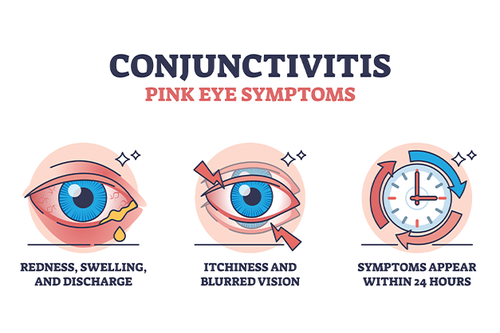
Infectious conjunctivitis: Whether viral or bacterial, is a different story. Viral cases are often linked to a cold and produce a watery discharge. Bacterial cases tend to bring thicker, yellow or green discharge, sometimes with eyelids stuck together in the morning. Both spread easily in a classroom where kids are likely to share supplies and toys.
WHAT THIS MEANS FOR SCHOOL
Most Kentucky schools ask families to keep a child with active, contagious pink eye at home until symptoms are clearly improving.
For bacterial conjunctivitis, that's usually about 24 hours after starting prescribed antibiotic drops. Viral conjunctivitis can take one to two weeks to fully clear since antibiotics don't treat it, so patience and good hygiene are the real treatment plan.
If pink eye makes its way into your home, a few habits help keep it from spreading:
If more than one child in your household has symptoms, assume it's contagious until a doctor tells you otherwise.
WHEN IT'S TIME FOR A VISIT
Thick discharge, swelling that closes the eye, sensitivity to light, or a fever alongside red eyes are all reasons to get seen by a doctor rather than waiting it out. So is any eye redness in an infant.
The emergency medicine-trained providers at Med Center Health Emergency + UrgentCare are here for you and your family. Walk in anytime for a quick, accurate diagnosis so you know whether you're dealing with allergies, a virus, or something that needs antibiotics.
To learn more about our Lovers Lane location, visit https://euc.medcenterhealth.org/locations/bowling-green-ky-er-and-urgent-care/.

GET DIRECTIONS TO OUR LOCATION
EMERGENCY OR URGENT CARE?
WHEN TO COME
No appointment needed. Walk-in and let our expert team take it from there.
FROM MINOR TO MAJOR, WE'VE GOT YOU COVERED
PROCEDURES AND CAPABILITIES
We provide a wide range of capabilities.
ARE YOU COVERED?
INSURANCE AND COSTS
You can count on us for outstanding patient care and fair billing.