WHEN TO TAKE STOMACH PAIN SERIOUSLY
Almost everyone has dealt with stomach pain at some point, but when the discomfort goes beyond the usual and starts interfering with your day, it can be hard to know whether to wait it out or head in to be seen.


Written by: Corey Alexander
Published on: April 22, 2026
Maybe it followed a heavy meal at your favorite Bowling Green barbecue spot, or a rich dessert that didn’t quite agree with you. In most cases, it passes quickly, but not always. So how can you tell when it’s something more serious?
At Med Center Health Emergency + UrgentCare, we’re here to help you recognize the difference and know when it’s time to stop waiting and get care right away.
COMMON CAUSES
Belly pain is a common reason people seek emergency care, and it’s something our ER-trained providers see every day. While plenty of cases are mild and fade with time, abdominal discomfort can occasionally point to an underlying issue that needs attention.
Part of the difficulty is that what we casually refer to as “stomach pain” isn’t always tied to the stomach itself. The abdominal region contains several key organs such as the liver, gallbladder, pancreas, and intestines, and discomfort can originate from any one of them. That overlap can make it challenging to identify the true source without a proper evaluation.
Some of the most common causes of stomach pain include:
For mild stomach pain, there are a few things you can try at home like avoiding food for a short time or sticking to bland, easy-to-digest options like crackers or bananas. You should also stay hydrated and consider home remedies like ginger for indigestion or peppermint to relax your digestive tract. Over-the-counter medications, such as antacids or pain relievers, can also provide temporary relief.
Although many of these concerns are short-lived and improve with time, symptoms can occasionally signal something more serious. Conditions like appendicitis, gallbladder disease, or an intestinal blockage may start with similar discomfort but can quickly worsen and require immediate care to treat safely.
DIAGNOSING AND TREATING STOMACH PAIN
If your stomach pain comes with any of the following symptoms, it’s a good idea to seek care at Med Center Health Emergency + UrgentCare:
You should also be more cautious if you have conditions like diabetes or if you’re pregnant or have a weakened immune system, as symptoms can progress more quickly.
When you visit our facility, our providers will work to identify the cause of your pain. One common method is dividing the abdomen into four quadrants — upper or lower, right or left — to narrow down the source. Being specific about your symptoms can help us determine whether further tests, such as imaging or lab work, are needed.
MED CENTER HEALTH EMERGENCY + URGENTCARE IS HERE FOR YOU
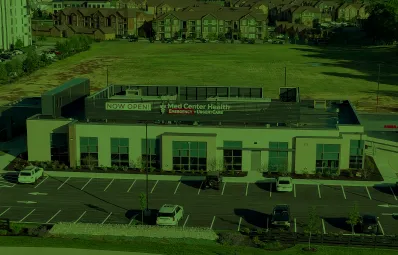
When your stomach pain is too much to handle, Med Center Health Emergency + UrgentCare is here for you. Because we combine urgent care and the ER under one roof, you don’t need to worry about where to go during a time that’s already stressful. To learn more about our Lovers Lane location, visit https://euc.medcenterhealth.org/locations/bowling-green-ky-er-and-urgent-care/.
GET DIRECTIONS TO OUR LOCATION
EMERGENCY OR URGENT CARE?
WHEN TO COME
No appointment needed. Walk-in and let our expert team take it from there.
FROM MINOR TO MAJOR, WE'VE GOT YOU COVERED
PROCEDURES AND CAPABILITIES
We provide a wide range of capabilities.
ARE YOU COVERED?
INSURANCE AND COSTS
You can count on us for outstanding patient care and fair billing.